Showing posts with label fall. Show all posts

Tuesday, January 10, 2012

Escarole & Meatball Soup


A steaming bowl of this escarole soup replete with meatballs is exactly what I imagine someone suffering the cold in the midwest would be hankering for. Here in sunny Southern California, where it smacks of Spring, it fits the bill quite nicely too. Hot and hearty, but not overly thick and heavy, this may just be the soup to carry you through all of 2012.


Thank you, Dana Bowen for sharing this terrific recipe with Saveur readers this December. An equally heartfelt thank you to Rita and Joseph for pointing it out to me. Rita declared it a winner and I couldn't agree more. The escarole soup contains two of my favorite things, meatballs and escarole! Add a mound of comforting rice, plenty of sweet onions, and a healthy dose of ground pepper and you've got a soup that is sure to satisfy.


The soup is a snap to make as long as you don't mind getting your hands dirty. Ground beef under your nails and in between your fingers is a certainty. For me rolling out meatballs is soothing work, carrying the promise of something delicious and nourishing just around the bend. The smell of the ingredients heaped up in the bowl was pure Italy, familiar and exotic all at once.


Just a couple of notes. I used fresh bread crumbs that I whizzed up in the food processor from a day old loaf of ciabatta. The recipe calls for seasoned bread crumbs, and I'm guessing that you can buy pre-seasoned breadcrumbs in a grocery store, but I didn't bother with that. I did not find the meatballs lacking due to this. I also don't own any Italian seasoning. I simply mixed together a tablespoon of oregano, basil, thyme, and marjoram. This did the trick, also without any noticeable want.


We supped on the escarole soup over the course of a few days. The soup is ever tasty the second and third go-round, but the meatballs do tend to fall apart (not necessarily a bad thing). Serve this to the young and old alike! A and I were mighty pleased and Fe. scarfed down the greens and meatballs like they were going out of style. A definite hit all round.

Dana Bowen's Escarole Soup

1 pound ground beef
1/2 cup seasoned bread crumbs
1/2 cup grated parmesan, plus more
1/2 cup grated pecorino
1/2 cup olive oil
1 tablespoon dried Italian seasoning
3 cloves garlic, thinly sliced, plus 1, minced
2 medium yellow onions, thinly sliced, plus 1, minced
1 small bunch parsley, minced
1 egg lightly beaten
Kosher salt and freshly ground black pepper to taste
2 large heads escarole, cored and cut in to 2-inch pieces
8 cups chicken stock
Cooked white rice, for serving

Mix beef, bread crumbs, parmesan, pecorino, 1/4 cup oil, seasoning, minced garlic and onion, parsley, egg, salt, and pepper in a bowl. Form into 30, 1 1/2-inch meatballs; chill.

Heat remaining oil in a large soup pot over medium-high heat. Add the sliced garlic and onions; cook until lightly browned, about 10 minutes. Add escarole; cook until wilted, about 6 minutes. Add stock; boil. Reduce heat to medium-low. Add meatballs; cook until meatballs are cooked through, about 20 minutes. Season with salt and pepper to taste. Serve over cooked rice; top with more parmesan and black pepper.

Serves 8

Thursday, November 10, 2011

New Mexican Green Chile Stew


A grey gloom is stretching outside my window. There was rain and there's more to come. Autumn is finally here, and the now-working heating is on. I've been drinking cup after cup of tea, and I've found that the only way to truly warm up is from the inside out.

If you're feeling even a hint of this kind of chill, I have a suggestion for you.

New Mexican Green Chile Stew.


I have this one issue of Saveur Magazine (September/October 2001) that is the most dog-earred, crumpled, wreck of a magazine. It is the issue that keeps on giving. I've made Pork Roast with Mustard and Herbes de Provence countless times. It is phenomenal. The Arroz con Pollo is the epitome of comfort food. I've whipped up the classic Clafoutis aux Pommes and now I can say that I've prepared the Green Chile Stew. It won't be the last time.

The recipe for green chile stew is a quintessential New Mexican recipe with a twist. It uses beef instead of pork. The humble chuck roast to be exact. The beef has a satisfying chew and its bath with the onions and garlic in slowly bubbling water produces a richly flavorful broth. Being a passionate soup-lover, this stew appealed to me on an intrinsic level. The soupiness is just what you need to cure a rotten case of the shivers.


This is not a complicated recipe. The hardest part is charring and peeling the anaheim chiles. This type of task used to scare me off when I was younger, but I've gotten the hang of it, and once you get in a groove, you can make quick work of it. Using the broiler is a breeze, but you can also char them on your stove-top if you suffer from broiler-phobia as I used to.

The recipe is in fact so simple, verging on minimal, that I was concerned that it might be a flop. Chiles, chuck roast, onion, garlic, potatoes, tomatoes, cumin. Sounds so basic. I swear when the meat was simmering away, I was the most skeptical of all. Boiled meat and onions, hmm. I really wasn't turned on. The pot looked so grey. But it is amazing what a simmer, some chiles and onion, garlic, tomatoes, and cumin can do.


The flavor is actually quite huge. Although this green chile stew is not very spicy. There is a faint notion of heat, but that is it. The robust beefy broth is soothing and verging on addictive.

I do have an important reminder, which I foolishly did not listen to when I said the same thing to myself. Do not crowd the pot, when you are browning the chunks of beef. I doubled the recipe. As I was throwing all the beef into the pot to brown, I knew I was making a big mistake. Your meat will boil not brown if the pot is too crowded. I know this. You know this. Listen! It makes such a difference.


The enticing aroma will fill your house. The windows will steam up. You will feel like your are doing right by the season. To my mind hot buttered tortillas are a necessary accompaniment and perhaps a crisp salad to finish it off.

New Mexican Green Chile Stew

8 medium-hot fresh green chiles, such as anaheim or new mexico
2 tablespoons vegetable oil
1 pound boneless beef chuck, in 1-inch pieces
Salt
1 medium yellow onion, peeled and coarsely chopped
1 clove garlic, peeled and finely chopped
5 new potatoes, peeled (I didn't bother peeling) and halved
2 medium tomatoes, cored and diced
1 teaspoon ground cumin

Set oven rack in top third of the oven and preheat the broiler. Arrange chiles in a single layer on a large baking sheet and broil on each side just until their skin blisters and chars, about 5 minutes per side. Transfer chiles to a medium bowl, cover with plastic wrap, and set aside until cool enough to handle. Using your fingers, peel off skins and remove and discard stems and seeds. Coarsely chop chiles and set aside.

Heat oil in a large, heavy-bottomed pot with a tight-fitting lid over medium-high heat. Generously season beef with salt, then add meat to pot and cook, stirring often with a wooden spoon, until well browned on all sides, about 5 minutes. Add onions and garlic and cook, stirring frequently, until onions are soft, 5 minutes. Add 3 cups water, scraping any browned bits stuck to the bottom of the pot. Reduce heat to medium, partially cover pot, and simmer until meat is tender when pierced with a fork, about 30 minutes.

Add potatoes to pot, reduce heat to medium-low, and continue cooking, partially covered, until potatoes are soft, about 20 minutes. Add tomatoes, cumin, reserved chiles, and salt to taste and simmer, completely covered, until meat is very tender when pierced with a fork, about 30 minutes more. Adjust seasonings. Serve with warm flour tortillas, if you like.

Serves 6


Friday, December 17, 2010

Roasted Parsnips


This is more a reminder than a recipe.

It's time for parsnips! They're at their peak in the late fall and winter. So seize the moment!

You can make a rich parsnip soup, enhanced with a little cream or a lovely purée with potatoes that will marry perfectly with duck or lamb. Parsnips will beautifully round out a homey pan of roasted turnips, rutabagas, celery root, and fennel. You can fry them up into little chips, and I've even heard of grilling the nutty-flavored roots.

But I'd like to suggest the most basic of ideas for parsnips. Roast them all by their little lonesomes. Pick medium parsnips, so that you don't peel away half of them because they are so small, and so you don't have to carve out too much of their woody core because they are so big.


Peel your parsnips and cut them lengthwise in quarters. If they are on the large side, trim out their cores. Toss the parsnips with enough olive oil to lubricate them and give them a healthy grinding of pepper and a generous sprinkle of kosher salt. Throw them into a roasting pan and then into a preheated 4oo degree oven until the are golden brown and soft, approximately 40 minutes.


This is simplicity itself. They are sweet and tender and slightly carmelized on the edges. Parsnips cooked this way are a stunning complement to roast beef or with any other roast meat for that matter.

This pale cousin of the carrot seems to have lost popularity over the years, but we should really bring it back to the table. They are a cinch to prepare and will easily please any crowd, including those finicky toddlers.


Tuesday, December 14, 2010

Cassoulet


You may remember that about six months ago, my friend, Joseph, and I put together a batch of duck confit, with the hopes of preparing a cassoulet that could compete with the best Toulouse had to offer.

Well, we did just that a few weeks ago.

Joseph and I were going back and forth regarding what recipe to use, because this is in no way a prepare-off-the-top-of-your-head kind of dish.

Not at all. It requires research.

I'd made cassoulet twice before, using a solid recipe from Gourmet. The Canal House Cooking recipes intrigued us, but in the end we wanted to try something a little more traditional.

When Joseph forwarded a recipe from Food & Wine that indicated the cooking was to be accomplished over four days, I thought that he was more than a little bit crazy. As if anyone, has time to prepare a four day recipe, let alone the mother of a toddler.

Yes, I was skeptical.

After a number of attempts at reading through the lengthy recipe, I realized that it was an adaptation of a Paula Wolfert recipe from The Cooking of Southwest France (fantastic cookbook -- just ask Jonathan Gold). Of course, a Paula Wolfert recipe would take four days -- she is the grand dame of slow cooking.

I decided to climb on board.

Big props to Joseph for his enthusiasm and willingness to take on a seemingly ridiculous project. Never in a million years would I have chosen to do this on my own. But in the afterglow of this project, I am so glad that we did.

Having chosen the recipe, the flurry of shopping began.

Where do you find pig skin?

What about Tarbais beans? Scratch those -- too hard to find -- we'll settle for cannellini.

Fe and I headed out to the Farmer's Market at Third and Fairfax, and hit up Monsieur Marcel, Huntington Meats, and Marconda Meats.

I hardly ever make it to Monsieur Marcel, but I dig it there. They had the Piment D'Espelette that I had been searching for. And even at $27 for a tiny jar, I figured it was my lucky day. They also had all the pancetta, prosciutto, Toulouse sausages, and cannellini beans that my heart could desire, so we were very well on our way.

Huntington had the ham hocks, and pork shoulder, and Marconda had the salt pork. The Grove graciously provided all the twinkling lights and water fountains that Fe could hope for, so it really turned out to be a perfect outing.

The other shocking aspect of this cassoulet recipe -- besides the time factor -- is the sheer amount of meat required. Not only would we be using our duck confit, we would be adding pork skin, pork shoulder, salt pork, prosciutto, pancetta, Toulouse sausages, two ham hocks, and duck fat.

Honestly, I felt mildly horrified by it all. Although strangely, when we were enjoying the final results, I quipped that the dish actually seemed innocent. The meat had all fallen apart. The fat had melted. You could barely tell how much artery-clogging-delight you were consuming.


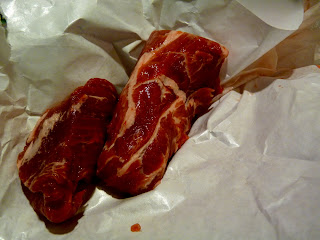
So I began on a Tuesday night. The beans needed soaking, and the pork shoulder needed to be cubed. The shoulder, skin, and hocks were placed in a bowl and seasoned lightly with salt and pepper, and then tucked away into the refrigerator to spend the night.


That was simple enough. Except for the fact that I screwed it up. Fresh ham hocks. I glossed over that little word, fresh. What we had ready to go on Wednesday were smoked ham hocks.

Not really the same thing.

I had a minor panic attack. If it were just me -- no big deal. But I was letting Joseph down. I'm not used to cooking with other people. It adds a whole new level of responsibility!

Racked with guilt, I made some phone calls. My former beau and knower of all things food talked me off the ledge. He convinced me that there were certainly folks living in the French countryside whose secret ingredient to exquisite cassoulet were ham hocks that were specifically and particularly smoked.

Phew. I believed him. And yes, it was definitely okay.


The next night, Wednesday, was a big night of cooking, involving simmering salt pork and pig skin, tying up skin bundles, melting duck fat, browning all manner of pork, and lots more simmering of the resulting pork ragout. An hour and a half's worth.


By the time the first simmer was completed, the clock was slipping past 9 p.m. Rita had seen to our hunger by bringing over food from the outstanding Pollo a la Brasa (lips burning from green sauce). Yet there was still an additional two hours of simmering to go, once the beans were added.

Staying up late was the only option. The beans finished cooking and cooling and much past my bedtime, I was asleep.


This recipe requires commitment. Joseph was back at my house by 8:40 the next morning.

The recipe instructs you to remove as much solidified fat from the surface of the pot. We didn't find an obvious layer of fat to chip away at. I think it may have seeped into the cannellini beans.

The slabs of prosciutto and pancetta that were browned the previous day and simmered in the ragout are to be plucked out and cut into bite-size pieces. The meat should be removed from the hocks. So much of the meat had already shredded itself during the simmering that this process was rather quick and easy -- not to mention that Joseph was the one doing it.


Strangely our bouquet garni had vanished entirely. The celery ribs were nowhere to be found! Mysterious. There had been a whole head of garlic that simmered away in our ragout, and those cloves were to be squeezed out to purée with the salt pork and raw garlic. Impossible. The garlic had completely worked its way out of its wrapping all on its own.


I did purée the raw garlic with the salt pork. We added that to the ragout and simmered for 15 minutes longer.

We had to taste. The excitement began to build. The dish was already pretty damn amazing and we had four major steps in the recipe to complete, including adding the duck confit and Toulouse sausages. It felt like we might have a real winner on our hands.


That was Thursday morning. Amusingly, we had finally finished the do ahead part -- only took three days! -- of the cassoulet recipe. We were free until Saturday afternoon!

Saturday night was designated as the cassoulet orgy, so Joseph and I got busy again on Saturday afternoon. The duck confit had to be retrieved from its hiding space, buried deep within a jar of duck fat and far back in the depths of my refrigerator. It had been quietly resting there for about six months.


The confit was heated through, removed from the bones, and then shredded. Those funny looking pork bundles were untied, and placed on the bottom of an old french earthenware casserole that I dusted off for the occasion.


No, we didn't spring for the $100 cassole. Maybe next fall.

The confit and the bean ragout were layered and the remaining broth was added to the cooking liquid.

Wait a minute. Here we had questions that were not obviously answered by the recipe.


Just how liquidy should the ragout have been? Ours was not liquidy at all. We added a bit of additional stock to make up for this, but then were left second guessing ourselves in the final stages of the recipe. Was the cassoulet too wet and did we need to cook it longer to reduce some of the liquid?


My only real complaint about the recipe is that it is almost punishingly long and detailed, but does not provide enough detail as to what your results should be throughout the journey. For such a commitment to the recipe on our part, I wanted the recipe to hold our hand a little bit more along the way.

But back to the process. At this point, because there was not quite enough animal fat in the cassoulet you add about two more tablespoons of melted duck fat. You know, just to be safe.

The cassoulet is then baked for an hour and a half. During that time the Toulouse sausages need to be browned in a little bit more oil, and cut into pieces, ready to be mixed in.


After the initial hour and a half of baking, the sausages are added and -- wait for it -- two more tablespoons of melted duck fat are stirred into the pot. The top is dusted with bread crumbs and the whole shebang is baked at a reduced temperature for just one more hour. After that the precious mix only needs to recover quietly on a cloth-lined rack for twenty minutes, before you can finally sup.


Writing this, I am struck by how insane the whole process was; how any realistic person would never even consider a recipe such as this. And quite honestly, I believe myself to be heavily based in reality.

But to be frank, this was so much fun. Even though I had trouble even reading through the entire recipe in one sitting, it was a project well worth tackling. Definitely something to do with a pal. And certainly a meal to be shared with deserving friends and family, perhaps even during these chilly winter holidays.


The results were dynamite.

The beans were luscious from absorbing so much pork and duck fat. The consistency seemed right -- not too soupy and not too stiff -- after we added a little extra stock and let it cook for a little extra time. I'm glad we added additional breadcrumbs on top as well. A crisp crust is essential to a great cassoulet. Next time, I would probably try to find a way to work the duck skin into the crumb topping to give it even more crunchy texture and contrast with the soft beans and meat.

On a cool fall evening the cassoulet went superbly with a bracing salad of romaine, rocket and pears, and several bottles of tannic red wine. We were sated, but not crippled by the meal, which to me equals success.
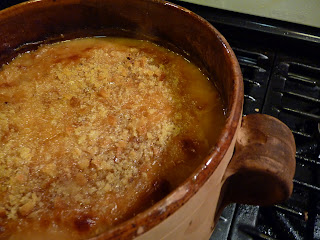
And on a final note, I cannot recommend highly enough making your own duck confit. It was fabulous. We ate the rest of it four nights later. Crisped up in a sauté pan and served with an acidic salad and potatoes roasted in duck fat, we were transported to the French countryside. Stellar.

Here is the link to the Paula Wolfert cassoulet recipe as adapted by Food and Wine.