Showing posts with label All About Braising. Show all posts

Monday, October 04, 2010

Molly Stevens' Lamb Shanks Braised with Lentils & Curry


Just in time for the cooler, wetter weather -- braised lamb shanks! Soft sweet meat that falls off the bone and hearty, earthy Le Puy Lentils with the exotic perfumey flavor of Madras curry are perfectly suited for autumn. They're exactly what I crave.


As soon as the air begins to cool, I am ready for slow-cooked braises. I'm not sure any other method of cooking works as well to soothe all of your senses. No other method produces as succulent results, and certainly no other method is as forgiving and flexible.
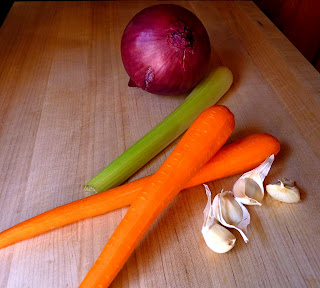

I wasn't always a big fan of lamb. I liked it fine, but I didn't lust for it. Spending all these years with A. changed me -- in so may ways. But pertinent to this conversation -- he turned me into a full-fledged lamb lover.

I am so grateful!


Now that it is fall, I cannot encourage you enough to buy Molly Stevens' James Beard Award-winning, All About Braising. I can state with absolute certainty that this is my favorite cookbook. Stevens gets it right with every recipe. Her directions are easy to follow, extraordinarily thorough, and the results make you look like a brilliant chef.


Just as with all of her recipes, Lamb Shanks Braised with Lentils and Curry follows a strict set of steps. You begin by preparing the meat, and then you brown it. You follow by adding the aromatics, preparing the braise, braising the meat, and then braising the meat and lentils. Appropriately, you end with the finish. All of her recipes follow this map.
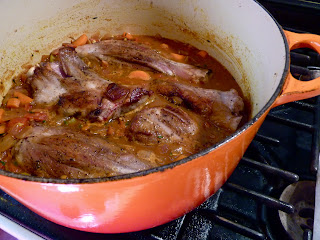

In the end my braise was not as soupy as she suggests it should be. It was still absolutely delicious and A.'s family was delighted with our meal. I will however, pay closer attention to how rapidly the braise is bubbling and adjust my oven accordingly in the future.

And there most definitely will be a future.


I served the lamb shanks with a big green salad dressed with an acidic, mustardy vinaigrette, a crusty baguette from Cookbook down the street, and a bottle of Syrah. I only wish I had this simmering away in the oven right now.


Lamb Shanks Braised with Lentils & Curry

2 tablespoons extra-virgin olive oil
6 lamb shanks (about 1 pound each)
Coarse salt and freshly ground black pepper
1 large red onion (about 8 ounces), coarsely chopped
2 carrots, coarsely chopped
1 celery stalk, coarsely chopped
4 garlic cloves, minced
1 1/2 tablespoons curry powder, preferably Madras
1 1/2 tablespoons chopped fresh thyme or 1 1/2 teaspoons dried
2 bay leaves
1 cup canned whole peeled tomatoes (about 6), drained and chopped
2 cups lamb, veal, or chicken stock
1/2 pound Le Puy lentils (about 1 1/4 cups)
1/2 cup chopped flat-leaf parsley
Lemon wedges or red wine vinegar for serving (optional)

Heat the oven to 325 degrees.

Trim the lamb shanks, removing some of the excess fat (not all of it!)

Season the lamb shanks with salt and pepper. Heat the oil in a large Dutch oven (6 to 7 quart) over medium heat. When the oil is quite hot, brown the shanks in 2 batches, turning so as to brown all sides, approximately 15 minutes per batch. Transfer the shanks to a platter, but do not stack.

Leave only 2 tablespoons of fat in the pot. Add the onions, carrots, and celery. Stir to coat the vegetables with oil, and cook until slightly browned, about 8 minutes. Lower the heat to medium and add the garlic, and cook for 2 minutes stirring occasionally. Stir in the curry powder, 1 tablespoon of the thyme and 1 bay leaf and cook for 1 minute. Add the tomatoes and stock, and raise the heat to high and bring to a boil. Stir occasionally, scraping the bottom of the pot. Boil for 4 to 5 minutes.

Place the lamb shanks in the pot, along with any juices that have accumulated. Overlap the shanks, if necessary. Bring the liquid to a simmer and cover with parchment paper, pressing down so that it almost touches the lamb and the edges extend about an inch over the sides of the pot. Put the lid on the pot, and cook in the lower third of the oven to braise at a gentle simmer. Check the braise after 15 minutes. If the liquid is braising violently, lower the temperature by 10 or 15 degrees. After 1 hour, turn the shanks over. Continue braising for another hour.

Place the lentils in a saucepan with 6 cups of water, the remaining 1/2 tablespoon of thyme, the remaining bay leaf and 1/2 teaspoon salt. Bring to a boil, lower the heat, and simmer for 10 minutes. Drain the lentils and transfer to a plate. Spread them out to stop the cooking and to cool. Set aside.

When the shanks have braised for 2 hours, transfer them to a platter. Skim the fat from the braising liquid. Stir in the lentils, and return the lamb shanks to the pot. Cover again with the parchment and lid. Place the pot in the oven and continue cooking for another 30 to 45 minutes, until the lamb is fork-tender and the lentils are soft but still intact.

Transfer the lamb shanks to a platter to catch any juices, an cover loosely with foil to keep warm. Taste for salt and pepper. Remove and discard the bay leaves. Place the lentils in a deep serving dish and rest the lamb shanks on top. Pour any accumulated juices over the shanks. Sprinkle with parsley and serve. Pass lemon wedges or red wine vinegar at the table, if desired.

Serves 6


Friday, July 30, 2010

Tuna Steaks Braised with Radicchio, Chickpeas & Rosemary


I thought I'd continue my attempt to seduce you with recipes from the extraordinary All About Braising by Molly Stevens. So, I prepared her Tuna Steaks Braised with Radicchio, Chickpeas and Rosemary for dinner last week.


I tend to braise beef, pork, and vegetables the most. When it comes to fish, I usually fall back on roasting and sautéing, although I have been known to fry up some pretty good catfish.

Braised fish just isn't a big part of my repertoire.

As I mentioned previously, it is important to mix things up. Writing a blog is very helpful in identifying the
rut that you may be stuck in at any particular moment.

I mean, just how many times can I mention roasting salmon, before I bore you to tears?!

And enough is enough with the pork already!


I am very tired of seared tuna.

Braising tuna is a pleasant change. Marrying the braised tuna with braised radicchio and chickpeas that have first been sautéed with rosemary and garlic infused olive oil produces an unusual yet elegant dinner.


The herbaceous oil and the radicchio and chickpeas are so well suited to each other that I would very happily make only this part of the dish and serve it alone for lunch or as a side to other proteins like grilled rib-eye or roasted chicken.

I think braised chicories are divine, whether it be radicchio, endive, or escarole. Their pleasing bitterness turns slightly sweet and luscious.

We should all be eating more of them!


I used Albacore tuna, but I'm curious if using Ahi tuna would have made an appreciable difference. I may try that the next time I'm feeling a bit more flush.


Braised in this fashion, the tuna is meaty and substantial. While this dish is certainly light enough to be enjoyed as summer-fare, it would be equally appropriate in the winter thanks to its warming soupiness, soft legumes and the use of piney rosemary.


This dish is delicious right off of the stove, but it also tastes terrific the next day served at room temperature. Don't try to reheat it, because it will become a dried out mess!

Tuna Steaks Braised with Radicchio, Chickpeas & Rosemary

1/3 cup extra-virgin olive oil, plus more for drizzling
4 garlic cloves, cut into slivers
2 teaspoons coarsely chopped fresh rosemary
1/4 teaspoon crushed red pepper flakes
1 medium head radicchio (about 6 ounces)
1 cup chicken stock
1 tablespoon freshly squeezed lemon juice, plus more to taste
One 15 1/2-ounce can chickpeas, drained and rinsed (1 1/2 cups)
Kosher salt
1 3/4 pounds tuna steaks (usually 2 good-sized steaks), about 1 1/4 inches thick
Freshly ground black pepper
2 tablespoons coarsely chopped flat-leaf parsley
Fleur de sel or coarse sea salt (
I used Maldon)

Combine the oil, garlic, rosemary, and pepper flakes in a medium high-sided skillet (10- or 12-inches). Heat over low heat, covered, until the garlic is fragrant, soft, and lightly golden, 4 to 5 minutes. Lift the lid frequently to check that the garlic isn't frying or browning. Set aside.

Cut the radicchio in half from core to top. Carve out the small core. Place the halves cut side down on a cutting board and slice into 1/2-inch-wide shreds. Add these to the infused olive oil Return the skillet to medium heat and sauté, stirring occasionally, until the radicchio is wilted, about 5 minutes.

Add the stock, lemon juice, chickpeas, and a pinch of salt to the pan. Bring to a simmer, cover, and simmer gently for 8 to 10 minutes.

Season the tuna steaks on both sides with salt and pepper. Set them on top of the chickpeas and radicchio, and reduce the heat to low. Cover and braise gently, lifting the lid once or twice to check that the liquid is simmering quietly, not violently. If necessary, lower the heat, or set a heat diffuser beneath the pan. After 8 to 10 minutes, the tuna steaks should be cooked halfway through. Carefully turn the steaks. Cover them with some chickpeas and radicchio. Replace the cover and braise gently until the steaks are just cooked through, another 6 to 8 minutes. Prod the center of a steak with a paring knife and peek to see that it's cooked to your liking.

Transfer the tuna steaks to a cutting board and divide into serving pieces. Set the tuna in warm shallow pasta bowls. Stir the parsley into the pan, taste for salt and pepper, and spoon the chickpea-radicchio garnish, along with plenty of liquid over the tuna. Finish each serving with a squeeze of lemon juice, a thread of good olive oil, and a pinch of fleur de sel or coarse sea salt.

Serves 4

Thursday, July 08, 2010

Pork Pot Roast with Apricots, Cardamom & Ginger


I have a few cookbooks. I haven't cooked from every one of them. Some have been disappointing. And others have been knock-outs.

Of these, there are a couple of TKOs.

Hovering around the top of that list is Molly Stevens' All About Braising. There is a reason why this book won the James Beard Book Award.

It is brilliant.

I've made a lot of Stevens' dishes. Over time, I bet that I will try them all, because I have not been disappointed once. It is a very rare cookbook that delivers so consistently.


I decided to make her Pork Pot Roast with Apricots, Cardamom & Ginger for Father's Day, because A. had previously raved about it and I felt sure that it would be a hit with my parents and sister -- it was.


The dish follows tradition by pairing pork with fruit. However instead of apples or pineapples, this recipe goes a more colorful and exciting route, using dried apricots. Happily, this makes it seasonally appropriate any time of year.


The apricots and the mirepoix appear to melt together during the long slow braise. The pork begins to fall apart, its softness marrying gorgeously with the saucy fruit.


The use of exotic spices like cardamom, turmeric, and ginger gives the dish a heady perfume, and an unusual flavor that permeates the meat. The garlic, cayenne, and orange zest add a contrasting zing to the other warm spices.

I used Cognac and Vermouth instead of Apricot Brandy and white wine, as Stevens suggests. These worked very well.


All of the recipes in All About Braising follow a detailed map. They require time and a bit of concentration.

Stevens has taken an almost scientific approach to braising, dissecting the process and presenting it in a straightforward step by step plan -- preparing the meat, browning the meat, adding the aromatics, preparing the braising liquid, the braise itself, and finally the finish.


She wants us to use an appropriately sized Dutch oven that just contains the meat and other ingredients. It should be cozy in there!

Well, looking at the pictures you'll see that I did not quite come through here. My smaller oven tends to burn on the bottom. What I really need -- okay, want might be the more accurate word -- is an oval Dutch oven.

A., are you listening?


Stevens is also fairly insistent about using a sheet of parchment under the lid of your pot, to ensure that all of the moisture stays inside, for optimal braising conditions. I have now incorporated this into my braising protocol.


I believe it was Stevens' enthusiasm for kitchen scales in All About Braising that encouraged me to finally purchase one. And what a blessing it has been. The scale takes all the unnecessary guesswork out of cooking.

You always know that you are on the same page as your cookbook's author.


What Stevens asks of us makes sense because of her thorough explanations. And in the end, the proof truly is in the pudding.


The results are spectacular.


Pork Pot Roast with Apricots, Cardamom & Ginger

One 4 1/2 to 5-pound boneless pork shoulder roast, preferably Boston butt
Coarse salt and freshly ground black pepper
2 tablespoons extra-virgin olive oil
1 medium leek, white and pale green part only, coarsely chopped (about 1 cup)
2 carrots, coarsely chopped
1 medium yellow onion (about 6 ounces), coarsely chopped
6 cardamom pods, husks split and discarded, seeds lightly crushed
1/2 teaspoon ground turmeric
1/4 teaspoon cayenne
1 tablespoon minced or grated fresh ginger
2 large garlic cloves, peeled and bruised
3 strips orange zest, removed with a vegetable peeler (each about 3 inches by 3/4 inch)
1 bay leaf
2 tablespoons apricot brandy or Cognac
1/2 cup dry white wine or dry white vermouth
2 cups chicken stock
1 cup dried apricots (about 6 1/2 ounces)

Heat the oven to 325 degrees

Trim any especially thick bits of fat from the pork, but do be sure to leave some. Roll and tie the pork (or have your butcher do it for you).

Pat the pork dry with paper towels. Season all over with salt and pepper. Pour the oil into a Dutch oven that will hold the pork snugly (4 to 5 quart works well), and heat over medium heat. Sear the pork on all sides, until deeply browned but not at all burnt, 15 to 20 minutes total. Transfer the pork to a plate.

Discard all but 1 tablespoon of the fat, and return the pot to medium heat. Add the leek, carrots, and onions, stir in the crushed cardamom, turmeric, and cayenne, and cook, stirring once or twice, until the vegetables begin to soften but do not take on much color, about 5 minutes. Add the ginger, garlic, orange zest, and bay leaf and cook until the spices are quite fragrant, another 2 minutes.

Pour the brandy into the pot. Bring to a boil and boil, stirring and scraping the bottom of the pot with a wooden spoon to release any caramelized bits, until reduced by about half, about 1 minute. Add the wine and let it boil for 4 minutes, scraping the sides and bottom of the pot. Pour in the stock and bring to a boil. Add the apricots and boil for another 2 minutes.

Place the pork on top of the vegetables and fruit. Add any accumulated juices from the plate. bring the liquid to a simmer and spoon some over the pork. Cover the meat with sheet of parchment paper, pressing down so that it almost touches the meat and the edges extend over the sides of the pot about an inch. Cover and slide the pot onto a shelf in the lower third of the oven to braise. Check that the liquid is simmering gently, every 30 minutes and give the pork a turn. If the liquid is simmering too aggressively, lower the oven heat 10 or 15 degrees. Continue to braise gently until the pork is fork-tender, about 2 hours in all.

Remove the pork from the pot and set it on a carving board or platter to catch the juices. Cover loosely with foil, and let rest for 10 minutes.

Return the pot to the top of the stove and skim off as much surface fat as you can with a wide spoon. If the sauce is very thin reduce it by boiling over medium-high heat for about 5 minutes. It should be the consistency of a thick vinaigrette. Taste for salt and pepper. Pour any juices that have accumulated under the pork into the sauce, and stir.

Remove the strings from the pork, and carve into 1/2-inch-thick slices. Serve with sauce and apricots.