Showing posts with label Italian. Show all posts

Tuesday, January 10, 2012

Escarole & Meatball Soup


A steaming bowl of this escarole soup replete with meatballs is exactly what I imagine someone suffering the cold in the midwest would be hankering for. Here in sunny Southern California, where it smacks of Spring, it fits the bill quite nicely too. Hot and hearty, but not overly thick and heavy, this may just be the soup to carry you through all of 2012.


Thank you, Dana Bowen for sharing this terrific recipe with Saveur readers this December. An equally heartfelt thank you to Rita and Joseph for pointing it out to me. Rita declared it a winner and I couldn't agree more. The escarole soup contains two of my favorite things, meatballs and escarole! Add a mound of comforting rice, plenty of sweet onions, and a healthy dose of ground pepper and you've got a soup that is sure to satisfy.


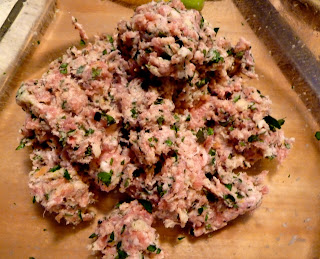
The soup is a snap to make as long as you don't mind getting your hands dirty. Ground beef under your nails and in between your fingers is a certainty. For me rolling out meatballs is soothing work, carrying the promise of something delicious and nourishing just around the bend. The smell of the ingredients heaped up in the bowl was pure Italy, familiar and exotic all at once.


Just a couple of notes. I used fresh bread crumbs that I whizzed up in the food processor from a day old loaf of ciabatta. The recipe calls for seasoned bread crumbs, and I'm guessing that you can buy pre-seasoned breadcrumbs in a grocery store, but I didn't bother with that. I did not find the meatballs lacking due to this. I also don't own any Italian seasoning. I simply mixed together a tablespoon of oregano, basil, thyme, and marjoram. This did the trick, also without any noticeable want.


We supped on the escarole soup over the course of a few days. The soup is ever tasty the second and third go-round, but the meatballs do tend to fall apart (not necessarily a bad thing). Serve this to the young and old alike! A and I were mighty pleased and Fe. scarfed down the greens and meatballs like they were going out of style. A definite hit all round.

Dana Bowen's Escarole Soup

1 pound ground beef
1/2 cup seasoned bread crumbs
1/2 cup grated parmesan, plus more
1/2 cup grated pecorino
1/2 cup olive oil
1 tablespoon dried Italian seasoning
3 cloves garlic, thinly sliced, plus 1, minced
2 medium yellow onions, thinly sliced, plus 1, minced
1 small bunch parsley, minced
1 egg lightly beaten
Kosher salt and freshly ground black pepper to taste
2 large heads escarole, cored and cut in to 2-inch pieces
8 cups chicken stock
Cooked white rice, for serving

Mix beef, bread crumbs, parmesan, pecorino, 1/4 cup oil, seasoning, minced garlic and onion, parsley, egg, salt, and pepper in a bowl. Form into 30, 1 1/2-inch meatballs; chill.

Heat remaining oil in a large soup pot over medium-high heat. Add the sliced garlic and onions; cook until lightly browned, about 10 minutes. Add escarole; cook until wilted, about 6 minutes. Add stock; boil. Reduce heat to medium-low. Add meatballs; cook until meatballs are cooked through, about 20 minutes. Season with salt and pepper to taste. Serve over cooked rice; top with more parmesan and black pepper.

Serves 8

Monday, October 24, 2011

Spaghetti alla Bottarga


Do you ever do this thing, where you take really small bites just to make a scrumptious dish you're eating last just a little longer?

I only eat like that when I am deeply in love with a dish. Last night I shoved a big bite of the spaghetti with bottarga that I had whipped up for dinner into my mouth. And I was all, YES, INDEED!!! Every bite after that was tiny.

Folks, I've consumed and loved many pastas with bottarga, but this dish just knocked my socks off.

Clear off.

I recently made a glorious steak with bottarga butter, and I managed to squirrel away about four ounces of the pressed and dried grey mullet roe for another night. This was the night! An easy-peasy Sunday night dinner that you'd pay big money for in a fancy-pants Italian restaurant.


I'm dead serious about the ease of this dish. You only need spaghetti, olive oil, garlic, crushed red pepper, parsley, lemon and bottarga. You can knock it out in about the amount of time it takes to boil the pasta. The garlic needs slicing, the parsley chopping, the lemon zesting, and the bottarga grating or shaving. Cinchy. Halving the recipe for two is no problem.

I snagged the recipe on the internet. A Mario Batali number. He is a good man. A really good man. I've always been a fan, but now I may be a stalker.

When I first read the recipe, I was actually worried that there were too many ingredients, because I remember enjoying similar dishes with just the olive oil, bottarga and possibly garlic. I worried that the lemon zest, parsley, and crushed red pepper would be gilding the lily.

Wrong, wrong, wrong.


For me this spaghetti with bottarga was perfection, the most harmonious balance of flavors. It isn't lemony, because you only use the zest. You do experience the perfume of the lemon, but it is just a sparkle of citrus that brightens up the dish. It isn't spicy, but there is a warmth. The ratio of olive oil to spaghetti is spot-on, the strands slipperily slicked. It is garlicky, but you do not suffer from an allium assault.

And then you have the bottarga itself, a funny looking orange slab of fish roe that is encased in wax when you buy it. It isn't cheap (between $30 and $80 on Amazon) and you can't buy it at the supermarket, but you can find it and you definitely should splurge on this delicacy. I've found it on the internet and in local cheese shops and specialty stores.

It is not fishy and weird. Bottarga has a subtle fish flavor. It is a little bit briny, but it possesses sweetness as well. To me the flavor of bottarga might best be categorized as umami. Bottarga is incredibly delicious and it adds body and depth to whatever you're using it in.

I can tell I'm failing a little bit here. It's just so difficult to really capture the flavor of this unique ingredient in words that I'm familiar with. Argh! Suffice it to say, I was sighing and moaning throughout the meal. I almost skipped out on watching Game of Thrones with A. so I could share this recipe with you last night. I woke in the night itching to get to my computer. I'll also confess to scraping up every remaining crumb of the bottarga from my counter like a jittery coke-head hoping for one last high. Oh you know what I mean. Plate of pasta!


There's only enough for me. No sharing this time. So someday this week, when A. is at work and Fe. is sound asleep, lunch is going to be quietly off the hook.

Mario Batali's Spaghetti alla Bottarga

8 tablespoons extra virgin olive oil
1 tablespoon crushed red pepper
2 cloves garlic, thinly sliced
1 pound spaghetti
2 bunches Italian parsley, finely chopped, to yield 1/2 cup
6 ounces bottarga, tuna or grey mullet
Zest of 2 lemons

Bring a large pot of water to boil and add 3 tablespoons salt.

In a large sauté pan, heat the olive oil, crushed red pepper and garlic over low heat until fragrant, approximately 2 minutes. Remove the pan from the heat. Cook the spaghetti, per the package instructions until al dente. Drain the pasta and add it to the oil mixture and add the parsley. Mix well over medium heat and pour into a warm serving bowl. Shave or grate the bottarga over the bowl and sprinkle with the lemon zest. Serve immediately.

Serves 4


Tuesday, October 04, 2011

Nancy Silverton's Spaghetti Alla Gricia


The Mozza Cookbook arrived last Friday afternoon (insert giant jump for joy).

I unwrapped it, carried it upstairs, curled up on my bed and started reading passages from the introduction. Within minutes, tears had started to run down my face. I'm not kidding or exaggerating. I was moved that quickly. I'm pretty sure this is the cookbook that I've been waiting for to provide the inspiration that has been sorely lacking in my life lately. The Mozza Cookbook may be exactly what I need to get back on track.

I have, literally, been waiting for its release. Impatiently, I might add. I can tell that this book is going to stoke the cooking fires within me. The last couple of months my energy, focus, and interest have been waning. It's been such a challenge to simply make it to the market and to then get the food on the table that I've been more than a little lax about posting.

And then the guilt. A. says that with any writing project comes a bucket-load of guilt. I had no idea how right he was. I'll wake up at 4 a.m. absolutely wracked with it.


Needless to say, I have high hopes that The Mozza Cookbook will indeed jump-start my lazy-blogging-bones. It has a good chance, because if there is one woman I love, it is Nancy Silverton. She is a hero of mine. I used to be a big fan of Campanile (sadly, not so much anymore). I've eaten more than a reasonable amount of La Brea Bakery bread and goodies. I own a number of her fantastic cookbooks (Nancy Silverton's Sandwich Book, A Twist of the Wrist, The Food of Campanile), and I am obsessed to the point of distraction by her Los Angeles restaurants, Pizzeria Mozza, Osteria Mozza, Mozza2Go, and the utterly marvelous family-style meals held at the Scuola Di Pizza.

So, yes, a book replete with all the most compelling recipes from the Pizzeria and the Osteria is a thrilling tome, to be sure. You won't be disappointed with the selection. You'll find the recipe for the coveted Butterscotch Budino, the pristine Grilled Octopus with Potatoes, Celery and Lemon, the sinfully rich Fresh Ricotta and Egg Ravioli with Brown Butter, and the recipe for one of my favorite pasta dishes ever, Linguine with Clams, Pancetta, and Spicy Fresno Chiles.

Of course, I wanted to dive right in. Of course, I had hardly any time to devote to cooking, and some of the recipes are quite long. Silverton even suggests that you, "think of them as roadmaps of the Italian countryside -- detailed, long, and sometimes winding -- but they will get you where you want to go." She is very thorough in her instructions and explanations. It's as if she is by your side, in your kitchen, coaching you through the process. Very comforting.

I did dive right in. I found one of the less challenging recipes that Silverton actually recommends as a weeknight supper and managed, all the same, to fall head over heels for Silverton once again. I chose the Spaghetti Alla Gricia, because I could head down the street to Cookbook to pick up a red onion and a hunk of guanciale and I'd be all set.


Spaghetti Alla Gricia is, as Silverton explains, a white, tomatoless version of the classic Amatriciana. This essentially means that you are making a pasta dish featuring guanciale (an Italian pork, bacon-like, delicacy made of dried, unsmoked pigs' cheeks) and perhaps onions.

In Silverton's recipe the pasta is loaded with red onion petals, guanciale, Parmigiano-Reggiano, and pecorino romano. She is very firm about the necessity of guanciale. No substitutions, not even pancetta will do. Just wait until you've got the goods, before even considering this recipe, she instructs.


While her instructions are exceedingly thorough, some of her more poetic language had me scratching my head. Onion petals? Guanciale batons? Am I insane? Because when she instructs that the guanciale should be cut into 1/4-inch-thick, 2-inch-long batons, I'm wondering about the width and the thickness. My portions were about 2 inches long, and 1/4-inch wide and deep, and I think this was a little too chunky. My batons did not crisp up in 3 minutes. Not even close, so my feeling is that the batons need to be thinner. Perhaps 2-inches-long, 1/4-inch-across, and 1/8-inch thick.


Does that make any sense?

Regarding the petals, Silverton has us cutting the onion in half and then separating the layers, then cutting each layer into petals an inch wide at the middle. If I am understanding what she is ultimately seeking, I found it easier to cut the onion in half and then into 1-inch wedges, and at that point to separate the layers.


Other than my inability to fully grasp those two concepts, the recipe is a breeze and does make for a decidedly decadent weeknight meal. I was feeling rather wicked for consuming so much pork fat in one sitting. But goodness, what a deeply pleasurable way to debauch.

It's amazing that a recipe as simple as this, with as few complicated ingredients can produce such a deeply complex flavor. The ingredients include the red onion, the guanciale, extra-virgin olive oil, red pepper flakes, black pepper, whole Italian parsley leaves, Parmigiano-Reggiano, pecorino romano, and water. I was surprised and impressed by the abundant use of water. The onions are cooked in a cup of water (smart not to add more oil unnecessarily). Please note that on my stove it took twice the amount of time for the water to evaporate. Another cup of water is added to the cooked guanciale and onions to essentially create the sauce that the hot pasta will ultimately be tumbled into.


The flavor is enormous. It's porky and peppery with a hint of sweetness from the onion. The cheeses add another layer of robustness, while the parsley contributes just a bit of fresh. I really dig the generous use of whole parsley leaves. Next time I might add a handful more.


Not surprisingly, I am champing at the bit waiting to have a go at another recipe. I'm hugely intimidated, but I want to try my hand at one of her life-changing pizzas. She shows you how! What a spectacular treat it is to have Nancy at home with me.

Nancy Silverton's Spaghetti Alla Gricia

Kosher salt
1 large red onion
6 ounces guanciale, cut into 1/4-inch-thick, 2-inch-long batons
1/4 cup extra-virgin olive oil
1 teaspoon red pepper flakes
1 teaspoon fresh coarsely ground black pepper
12 ounces spaghetti
1 cup whole fresh Italian parsley leaves
2 tablespoons freshly grated Parmigiano-Reggiano
2 tablespoons freshly grated pecorino romano, plus a wedge for grating

Fill a pasta pot or a large stockpot with 6 quarts of water, add 6 tablespoons of salt, and bring the water to a boil over high heat. If you are not using a pasta pot, put a colander in the sink or have a pair of tongs handy for lifting the pasta out of the water. (See what I mean? Detailed.)

Cut the onion in half, separate the layers, and cut each layer into petals that are 1 inch wide across the middle. Put the onion petals in a large sauté pan with 1 cup of water and a big pinch of salt and cook the onion over high heat until the water evaporates, about 5 minutes. Add the guanciale and olive oil and cook over medium-high heat until the guanciale is crisp about 3 minutes. Remove the pan from the heat and add another cup of water, the red pepper flakes, and black pepper. Turn off the heat while you cook the spaghetti.

Drop the spaghetti into the boiling water, stir to prevent the strands from sticking together, partially cover the pot so the water returns to a boil quickly and continues boiling, and cook the pasta, using the time indicated on the package as a guide, until it's al dente (whew!). About 1 minute before the pasta is done, place the sauce over high heat. Lift the pasta out of the cooking water, or reserve 1 cup of the water and drain the pasta, and immediately add it to the pan with the sauce. Cook the pasta with the sauce for 2 minutes, stirring with a rubber spatula or tongs, to coat the pasta with the sauce, adding some of the reserved pasta water if the pasta is dry and sticky instead of slippery and glistening. Turn off the heat and stir in the parsley. Add the grated Parmigiano-Reggiano and pecorino romano and stir to combine.

Use the tongs to lift the spaghetti out of the pan and onto the center of each of four plates, dividing the pasta evenly, and twirling it as it falls onto the plate to form a tight mound. Spoon any sauce left in the pan over the pasta and use a microplane or another fine grater to grate a light layer of pecorino romano over each plate, and serve.

Serves 4


Sunday, April 10, 2011

Bagna Cauda


When we had dinner a couple of months ago at Mozza for their Tuscan beef night, one of the standouts of the evening had nothing whatsoever to do with cow. The bagna cauda that kicked off the evening was spectacular. It has been haunting me ever since.


Bagna cauda basically translates from the Italian to hot bath in English. From Piedmont, Italy, it is a pungent hot dipping sauce composed of olive oil, butter, garlic, and anchovy. From there it is open to interpretation. I added lemon zest and lemon juice and I'm glad that I did. Raw vegetables are dunked into the bath and furiously gobbled up.


There are plenty of dishes where anchovies are used to great advantage and the recipe will tell you that your guests will never even guess that anchovies are in the dish. This is not one of those. It is all about the anchovies and garlic. And holy smoke, married together in melted butter and olive oil, they make an addictive pair.


I tried to finagle the recipe for Mozza's version out of Chef Chad Colby to no avail, but in the end it really isn't complicated. It requires a bit of mashing and melting. That's all. The lemon zest and juice that I added, gave the dish just a hint of zing and brightness.


You can use almost any kind of vegetable. Celery and cardoons are classic. I went with baby fennel, chiogga beets, celery, baby carrots, cauliflower and radishes. Vegetables never tasted so good!


The bagna cauda was the start of a crazy Cioppino dinner party that we had last weekend. The raw oysters and the Cioppino were divine, but the bagna cauda was hands down my favorite part of the meal.

Bagna Cauda
3 cloves, peeled and chopped
10 imported anchovy fillets, chopped
1 stick (4 ounces) unsalted butter
1/2 cup extra-virgin olive oil
1/2 teaspoon finely chopped lemon zest
4 teaspoons fresh lemon juice
Kosher salt to taste

Using a mortar and pestle mash the garlic and anchovies to a paste.

Place the butter and olive oil in a smallish saucepan. Add the paste and bring to a simmer over low heat. Simmer for five minutes or so. Remove the pan from the heat and add the lemon zest and lemon juice. Season with salt, if needed.

Serve with raw vegetables.

Serves 6 (This was actually plenty for 8 of us, with some left over, but really it depends on the kind of people you hang out with.)


Thursday, February 10, 2011

Risi e Bisi


Risotto is very good, but risi e bisi is better.

At least to me it is. I'm a big sucker for the soupiness.

Risi e bisi is a classic Venetian dish that typically celebrates spring and with it the arrival of fresh peas. Now, I do love fresh peas. I do. However I am pretty much on board with #21 of the last Saveur 100 issue. Frozen peas. Fergus Henderson quips: a wise old man once told me: Wait till peas are in season, and then use frozen.


Oh, the convenience! There is always a bag or two in my freezer, ready to add to Fe's dinner or to toss into pasta or to simmer with mint, olive oil, and thinly sliced onions (thank you, Nigel Slater!). They easily cook up in five minutes. And for the parents of toddlers reading this, I'll pass on a tip that my dear friend Sharmon shared with me. Give the frozen peas to your kiddos as a healthy snack. Yes, frozen. Taste them. They're good and the kids love to munch on them!

It's February. Why bother waiting until the spring, when I can enjoy a soothing supper of risi e bisi now, using perfectly delicious frozen peas?


Risi e bisi is basically a casual souped up version of risotto. There is none of the heavy duty stirring involved. And it takes much less time to prepare. You'll need to use short-grain rice like arborio or carnaroli, and naturally the better your parmigiano-reggiano and stock are the more divine your results will be.


I made risi e bisi on Tuesday night. I was pleased because A. really seemed to like it, judging by his comment that he never expected beige food to taste so good. Ah, a girl could really get used to praise like that.


We're not socked in by winter snows here in Los Angeles, but the nights do get cool -- by our standards -- and this dish provides perfect comfort for taking the chill off. It is a little bit sweet from the peas and onions and just the right bit salty thanks to the parmigiano-reggiano. I love a healthy grinding of pepper over the top.


Risi e Bisi

3 tablespoons extra-virgin olive oil
4 tablespoons butter
1 large onion, chopped
2 cups frozen peas, mostly defrosted if possible
Salt & freshly ground pepper
6 cups chicken stock or vegetable if you prefer
1 1/2 cups arborio or carnaroli rice
1 cup freshly grated parmigiano-reggiano

Heat the stock in a pan, and keep at the ready.

Heat the olive oil and 2 tablespoons of butter in a heavy medium-sized pot over medium-high heat. Add the onions and cook stirring occasionally until soft and faintly starting to color. Season with salt.

Add the rice, stirring until coated with the olive oil and onions. Then add 5 cups of the hot stock. Stir and cover, lowering the heat so the stock is gently bubbling. Cook the rice, stirring every so often, for approximately 15 minutes. Tip in the peas and stir. Cook for about 5 more minutes, until peas and rice are just tender.

Remove the pot from the heat. Add the remaining stock. Stir in the butter and half of the parmigiano-reggiano. Season with salt and pepper, as needed. Serve with the remaining cheese sprinkled over the top.

Serves 6

Friday, August 06, 2010

Summer Tomato and Garlic Pasta


If you think about it, tomato and garlic pasta should be a snap. There are very few ingredients and you essentially just throw them all together and -- presto -- dinner.

This is easy cooking.

But I am going to come straight out with the truth -- I have screwed up this dish more times than I care to mention.

I know how to cook! What am I doing?


Perhaps it is a fear of using too much olive oil that trips me up.

You do not want to hold back. The noodles, preferably long skinny ones like cappellini, should be well slicked with oil and juices. You're looking for optimal slipperiness.

I got tired of expecting a gorgeous dinner and ending up with so-so spaghetti. So now I always do a quick review of Alice Water's recipe in Chez Panisse Vegetables, before I start.

If you have perfectly ripe tomatoes (And you should now, because it is peak season!) and a delicious fruity olive oil, her recipe guarantees success.

Thanks to Eric, my former boyfriend, brilliant restauranteur and fantastic cook, I have been using olive oil from -- wait for it -- Costco. The Kirkland brand no less. This extra virgin olive oil is a fruity and full bodied oil made from olives grown on the hills of Tuscany.


Look for a bottle that says "Toscano" and that states the specific harvest the olives are from. Right now the November/December 2009 oil is on offer.

The olive oil is inexpensive enough to cook with, at about $12 a bottle, and delicious enough to use for salads and to finish dishes. We go through the stuff like it's going out of style.

There are plenty of other pricier and fancier oils out there, but right now we are very content with the Kirkland liquid gold.


When making tomato and garlic pasta, be sure to have your mise en place ready to go next to stove. This is quick work and there is no time for fooling around. One minute of hesitation, and you'll end up with burnt garlic and be forced to start all over again.

While the pasta water is coming to a boil, the ingredients should be chopped. While the pasta is cooking, the sauce should be made. If you are efficient in the kitchen and cooking very thin pasta, dinner can be ready in just 15 minutes.


Tomato and garlic pasta is the quintessential dish of summer. It is the purest appreciation of what the farmer's market or your garden has to offer. Pick a few tomatoes, pluck a handful of basil, chop a few plump cloves of garlic and you are moments away from a divine dinner.

Alice Water's Summer Tomato & Garlic Pasta

3 ripe tomatoes (or more if they're little guys)
3 cloves garlic
1 small bunch parsley or basil (I used both this time and was very pleased with the results.)
1/2 cup fruity extra-virgin olive oil
3/4 pound pasta (Cappellini is my favorite for this application.)
Salt and pepper

Put a big pot of water on to boil.

Cut out the stems from and then dice the tomatoes. Chop the garlic. Chop the herbs. Have everything ready to go next to the stove.

Cook the pasta in the salted boiling water.

Heat the olive oil in a heavy-bottomed pan, until hot but not smoking. Add the garlic and stir. Immediately add the tomatoes, so the garlic does not brown at all. Stir and then add the chopped herbs. Cook for a few minutes, until the tomatoes are warmed through. Season to taste with salt and pepper and toss with the cooked and drained pasta.

Serves 4


Tuesday, July 27, 2010

Nigel Slater's Pork & Lemon Polpettine


I can't tell if I have built up enough cred with you folks to just tell you to try something. My gut tells me to go for it.

Trust me! These gorgeous little meatballs won't disappoint!

In the end, it isn't such a big leap of faith. I'm really asking you to believe in Nigel Slater. That's not so hard to do! He's a good egg, a passionate food-lover, highly regarded author and columnist, and celebrated home chef.

Trust him!

He calls these, "delectably moreish little balls." I find his writing and these scrumptious pork and lemon polpettine equally addictive.


You'll need ground pork, lemon zest and juice, fresh bread crumbs, grated parmesan, thyme, anchovies (I can't get enough of these little suckers, lately!), and parsley. The scent of a sour, salty sea breeze wafts up towards you when you mix these ingredients together.


And that's nothing compared to the aroma of these polpettine when they are cooking.


These little balls become delightfully sticky and crispy, so be sure to use a non-stick pan. After browning them, you let them simmer away in stock for a bit. The result -- a savory pan sauce that is perfect spooned over the polpettine and perhaps some slippery noodles as well.

I served them over a tiny grain-like pasta, but that seemed superfluous. I think the lemon polpettine with their juices drizzled over and perhaps a few slices of tomato and some garlicky greens are really all you need to be quite happy, indeed.


Nigel Slater's Pork and Lemon Polpettine


1 1/4 cups fresh white breadcrumbs
1 pound ground pork
1 lemon, zested and juiced
1 large handful of parsley, chopped
6 large sprigs thyme, leaves stripped from stems
2 heaped tablespoons grated Parmesan
10 anchovy fillets, chopped
Flour, for coating
2 tablespoons olive oil
3 tablespoons butter
3/4 cup chicken stock

Combine the breadcrumbs, pork, lemon zest, lemon juice, parsley, thyme, Parmesan, anchovy in a large bowl. Season with salt and more generously with pepper. Mix thoroughly.

Make eighteen or so small balls of the mixture, using a heaped tablespoon of pork for each. Flattening each ball makes them a bit easier to cook. Roll the balls lightly in the flour.

Heat the olive oil and butter in a heavy non-stick pan. Fry the polpettine in batches -- perhaps eight to ten per. Cook for four or five minutes, until they are crisply golden on each side. Once you have done this with all them, put them all back in the pan and leave to cook through to the middle -- a matter or six to eight minutes more. Don't over-do it with the turning, so they are able to develop a nice crust and don't fall apart.

Pour out most of the fat and add the chicken stock. Leave to bubble for a good two or three minutes, scraping up any crusty bits. Let the stock reduce a bit and then serve the polpettine with the juices spooned over.

Serves 4

Friday, May 21, 2010

Italian Pot Roast


If you're looking to be comforted, I may have just the recipe for you.

It's the perfect recipe for those of you who are looking to satisfy your slow-cooked beef and pasta craving. For those of you who do not want to put in much effort -- just the time for a long slow simmer -- this goes out to you too.

And lucky us, it is yet another recipe stolen from my mother's repertoire!

We have been eating this Italian pot roast with rigatoni forever. Little wonder: it warms you up when cold, it soothes you when you're down. It can feed a large group if you double it.

A great make-ahead recipe for casual entertaining, it's delicious the first night, and even better the second and third. Very handy indeed.


I love having this dish in my back pocket when I don't know what to cook. The list of ingredients is short. I know it by heart. If I am wandering around the aisles of the market uninspired and lost, I can always turn to this Italian pot roast.

The soft, slow-cooked chuck roast falls apart in a bath of tomatoes and mushrooms. The scent of garlic and rosemary will waft through the house and out the window, watering the mouths of all of your neighbors.


I tend to always serve it with rigatoni. I love the ridges and I love the way the sauce laps into the tubes. That said, I may actually be forced to use penne to finish off the leftovers. Things could be worse.

You are supposed to serve the sauce with the rigatoni as a first course, and then slice the meat and serve it with vegetables as the main course. I never do this. I prefer to eat the meat with the pasta in a soup plate (that's for you, dad!) and to have a garlicky green salad on the side.


For me, freshly grated parmesan cheese and red pepper flakes are a must. For others, maybe just the parm.


Italian Pot Roast

2 tablespoons olive oil
2 large cloves garlic, smashed
salt and pepper
3 pound boneless chuck roast
1 large can whole tomatoes, preferably san marzano
1 bay leaf
2 branches fresh rosemary
1 cup red wine
10 or so mushrooms, sliced
1 pound rigatoni

Heat oil in a large heavy pot. Add garlic, cook until golden, and then remove. Do not let it get too dark, or everything will taste bitter.

Generously salt and pepper the beef all over. Sear on all sides until dark brown.

Lower the flame. Add the tomatoes, bay leaf, rosemary, and wine. Cook for 2-3 hours, until very tender. If it is not tender, keep cooking.

Remove the meat. Add the sliced mushrooms and simmer for 10 minutes.

Meanwhile, cook the rigatoni in a large pot of salted boiling water until al dente.

Either serve the rigatoni with the mushroom and tomato sauce as a first course and the sliced meat as a main, or do as I do and serve both the sliced meat and sauce over the rigatoni.

Serves 6.


Tuesday, May 18, 2010

Pasta Carbonara


Pasta Carbonara is very likely my favorite pasta dish. With just a little bit of practice, it is a snap to make and the payoff is huge. A great dish to impress a date! Although best when it is chilly, I don't know anyone who would turn it down in the middle of summer.

It pops up on a lot of menus, but so many versions are inauthentic. Who uses cream in Pasta Carbonara?!? Sacrilege.

Traditionally the ingredients include pecorino, guanciale, and raw eggs. There seems to be significant debate about this. Some people even use white wine! Ack!


I do think there is flexibility when it comes to the pork and the cheese. I routinely use parmesan. I have never used guanciale. Sinner!

I'll use pancetta, but am completely satisfied with bacon. And I'll also confess that I like to add red pepper flakes (from Penzey's, preferably) and chopped parsley.


Hilariously, I have just read this quotation in Giuliano Bugialli's Bugialli on Pasta: "Of course, smoked bacon should never be substituted in this dish, since pancetta itself must dominate." See what I mean?


Damani Thomas taught me how to make this dish back at Oswald in Santa Cruz. It has been in my repertoire for about fifteen years. Thank god.


The idea is to combine the hot fat from the olive oil and bacon with the raw eggs to make a creamy emulsion. The hot fat cooks the eggs.

There is a luscious quality to this dish. It is creamy and rich thanks to the eggs, the cheese and the fat. But there is also the garlic kick and the salt of the pork and the heat of the chili that satisfy your most constant cravings. Or mine, anyway.


Pasta Carbonara

1/2 pound or a bit more spaghetti (or linguine if you have recently discovered that this is your favorite pasta, like me)
2 eggs (I figure an egg per person.)
8 or so slices of bacon, chopped into lardons or approximately 1/2 cup pancetta, chopped into lardons (This could vary depending on your love of pork.)
4 or so tablespoons olive oil
1 cup or more grated parmesan
2 or 3 plump cloves of garlic, chopped
1 tablespoon parsley, chopped
red pepper flakes, to taste
salt and pepper

Bring a large pot of water to boil and salt it. Cook the spaghetti until al dente.

Cook bacon in a large sauté pan in olive oil, until browning but not too crisp. Add garlic and stir. Do not let the garlic brown. If necessary remove from heat until pasta is ready.

Meanwhile whisk eggs in a large metal bowl. Mix in cheese, parsley, red pepper flakes, salt and pepper.

Drain spaghetti and add to the pan of bacon. Stir until combined and the spaghetti and oil are hot.

Add the ingredients in the pan to the egg mixture, stirring immediately until well combined and you have arrived upon a creamy sauce. If necessary, stir while holding metal bowl over heat for a minute.

Taste for salt and pepper.

Serve immediately. This cools far too quickly, so hurry up!

Serves 2.